
What Is a Coronary Stent?
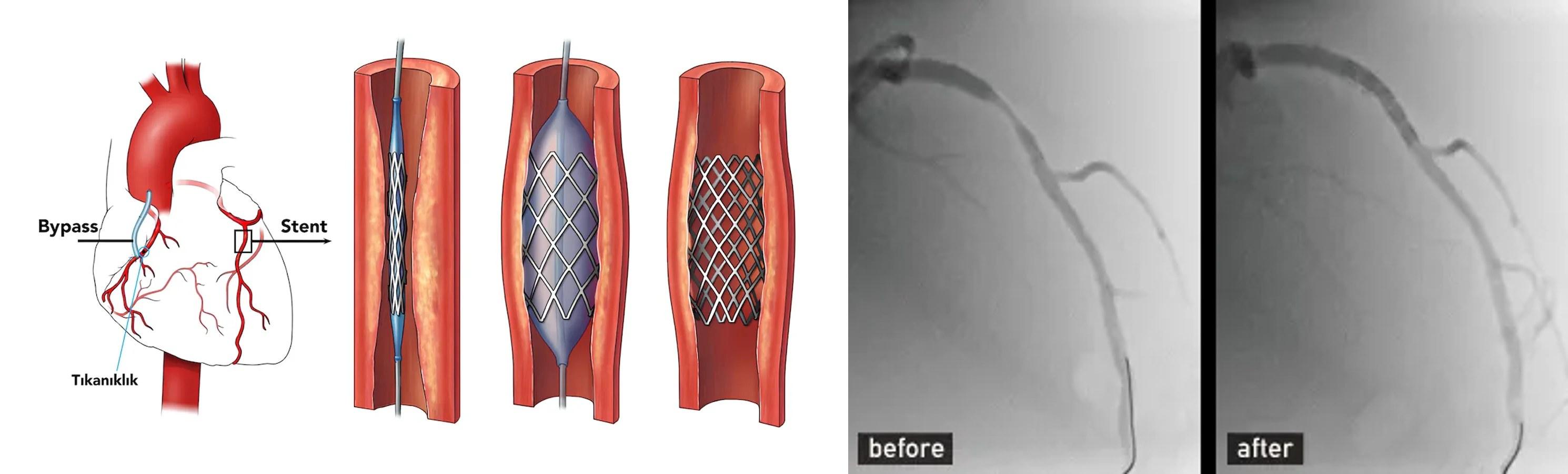
A coronary stent is a small, expandable metal mesh tube placed inside an artery to help keep it open after treatment of narrowing or blockage in a heart artery. Most stents used today are drug-eluting stents, which help reduce the risk of the artery narrowing again.
- Catheter-Based
- Method
- Usually Local Anesthesia
- Anesthesia Type
- Usually Same-Day
- Hospital Stay
Who Needs Coronary Stent Placement, and When?
Coronary stent placement may be considered for certain types of narrowing and clinical presentations detected on coronary angiography. The situations below are general examples in which this method may be considered for evaluation.
Patients With Significant Narrowing Detected on Angiography
When narrowing that significantly restricts blood flow is detected during coronary angiography, stent placement may be considered to open the artery.
Patients Requiring Emergency Intervention for Acute Coronary Syndrome
In patients presenting with a heart attack (myocardial infarction) or unstable angina, urgent opening of the blocked artery may be required.
Patients With Persistent Symptoms Despite Medical Therapy
In patients whose exertional chest pain (stable angina) persists despite medical therapy, interventional treatment options may be reviewed.
Patients Who Develop Recurrent Narrowing After a Previous Intervention or Surgery
In patients who previously had a stent placed or underwent bypass surgery, re-evaluation may be carried out if renewed narrowing develops in the artery or the graft.
Difference Between Coronary Stent Placement and Bypass Surgery (CABG)
Coronary Stent (Percutaneous Coronary Intervention)
Performed via catheter through a small skin incision; usually performed under local anesthesia.
Bypass Surgery (CABG)
Performed as open-heart surgery; requires general anesthesia and a longer recovery process.
Choice of Method
Which approach is more appropriate is assessed based on the number, location, and complexity of the narrowings and the patient's overall health status.
What Does Stent Treatment Provide?
Stent treatment:
Included
- May increase blood flow to the heart
- May reduce complaints related to narrowing in the heart's arteries
- May be used in the treatment of acute arterial blockages
- May help open a blocked artery, particularly during a heart attack
Not included
- A stent does not completely eliminate arterial hardening (atherosclerosis). For this reason, keeping cholesterol, blood pressure, diabetes, and other cardiovascular risk factors under control after the procedure is important.
Assessment and Approach
Before and during coronary stent placement, various patient-specific clinical factors are taken into account.
Detailed Angiographic Assessment
The location and length of the narrowing and the vessel diameter are imaged before the procedure to plan the appropriate stent selection.
Review of Coexisting Conditions
Kidney function, bleeding risk, and other systemic conditions are included in the procedure plan.
Assessment of Medication Adherence
Adherence to the antiplatelet therapy to be used after the procedure and possible drug interactions are reviewed beforehand.
Post-Procedure Follow-up Planning
Follow-up examinations and, if needed, further tests to monitor the patency of the artery are planned.
How Long Does the Procedure Take?
The procedure usually takes 30–60 minutes, and patients are mostly discharged the following day.
Suitability Assessment Factors
Who can undergo coronary stent placement, and when, is determined by evaluating the clinical factors below together.
General Health Status
The presence of systemic conditions unrelated to the heart and the patient's overall functional status are included in the assessment.
Previous Test Results
If available, results of previous tests such as angiography, ECG, and echocardiography are taken into account in procedure planning.
Coexisting Conditions
Conditions such as diabetes, kidney failure, or a tendency to bleed may affect the stent selection and treatment plan.
Anatomical Features
Anatomical features such as the vessel diameter and the length and location of the narrowing play a role in determining the method to be used.
The information provided here is for general informational purposes; the diagnosis and treatment plan are determined following an individualized assessment.
Frequently asked questions about Interventional Cardiology
A coronary stent is a small tube, typically made of metal mesh, that is placed to maintain the patency of the artery after a narrowing in the arteries supplying the heart has been opened. It is placed via catheter, without surgery.
Narrowing in the heart's arteries can reduce blood flow to the heart and lead to chest pain or more serious clinical conditions. Stent placement aims to restore blood flow by opening the narrowed segment of the artery.
Your physician may consider stent placement in situations such as a significant narrowing detected on coronary angiography, an acute coronary syndrome, or angina symptoms that persist despite medical therapy. The decision is always made based on your individual clinical findings.
The procedure is usually performed using a thin catheter inserted through the wrist or groin. The narrowed segment of the artery is first widened with a balloon, and then a stent is placed in this segment; the procedure is mostly carried out under local anesthesia.
Regular adherence to the antiplatelet medication regimen determined by your physician after the procedure is important. Caring for the access site and attending the recommended follow-up examinations are advised for monitoring the process.
A coronary stent is placed via catheter through a small skin incision, while bypass surgery requires open-heart surgery. Which method is appropriate is assessed based on the number of affected arteries, the location of the narrowing, and the patient's overall health status.
Get in touch with us for an evaluation
Send your appointment request; we'll let you know about the evaluation process suited to your complaint and needs.