
Dr. Alptekin Özkoç

INTERVENTIONAL CARDIOLOGY

WHAT IS CORONARY ANGIOGRAPHY?
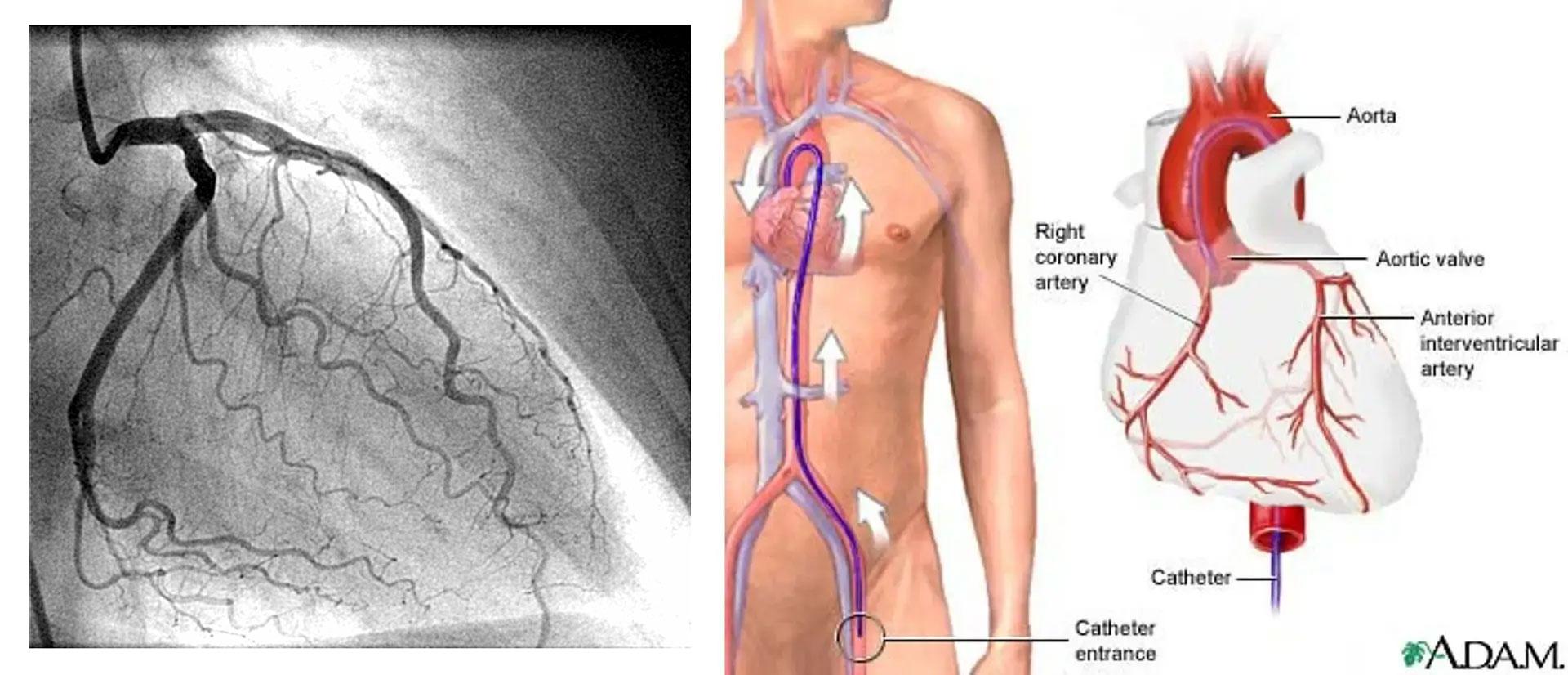
Coronary Angiography

Coronary angiography is a minimally invasive procedure used to visualize the coronary arteries and identify narrowing or blockage.

A thin catheter is introduced through a blood vessel, most commonly through the wrist (radial artery), and advanced toward the heart.

Contrast material is then injected while X-ray imaging is performed.

Coronary angiography can help determine:

  • Whether significant coronary artery disease is present
  • The location and severity of coronary narrowing
  • Whether angioplasty or stent treatment may be appropriate
  • Whether further evaluation or another treatment strategy is required

The procedure is commonly performed through radial access (wrist) and can often be completed within a relatively short period of time (15 minutes). Patients are usually discharged from the hospital on the same day.
WHAT IS CORONARY ANGIOPLASTY?

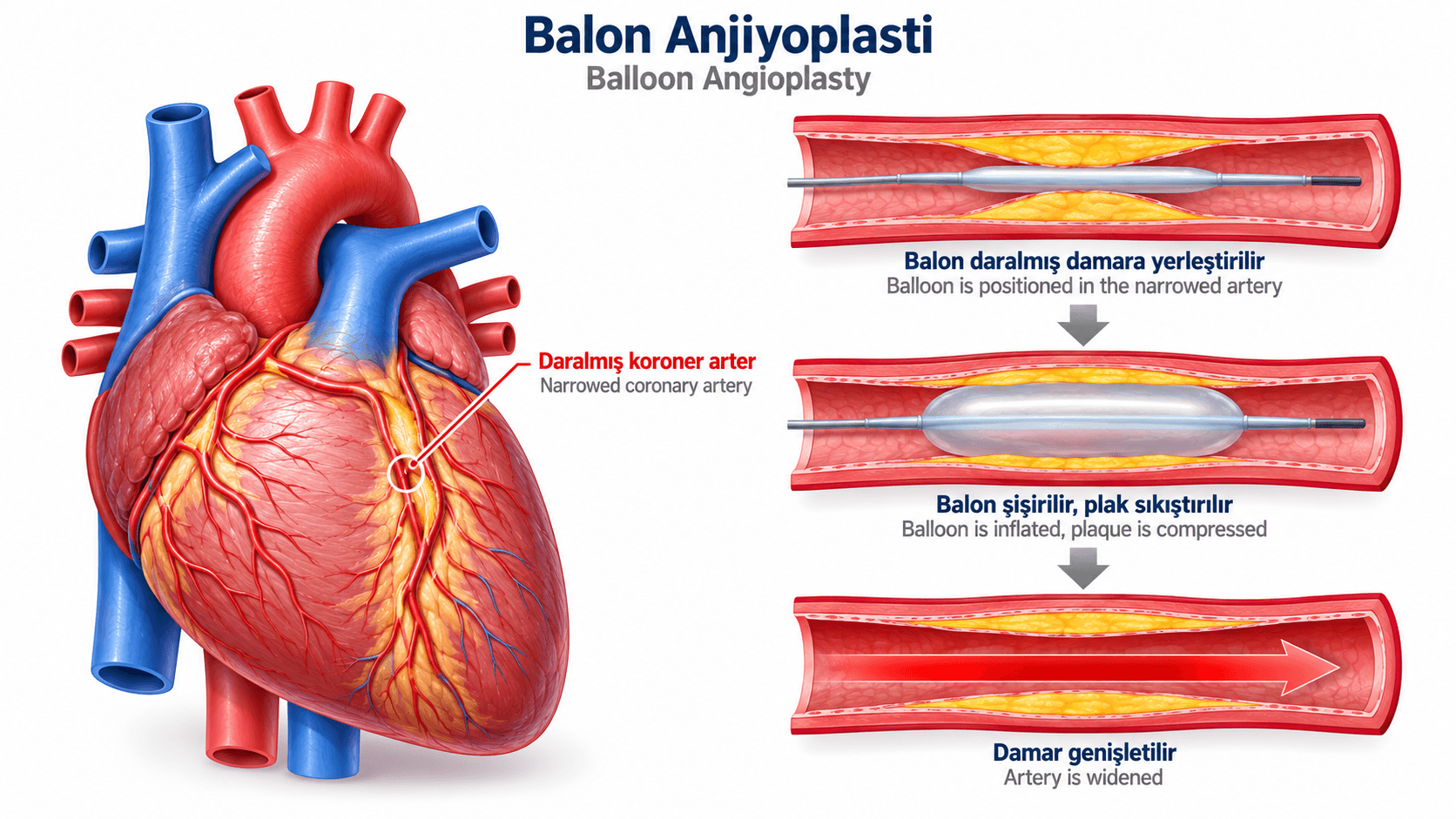
Coronary Angioplasty

Coronary angioplasty, also known as percutaneous coronary intervention (PCI), is a catheter-based procedure used to restore blood flow through a significantly narrowed or blocked coronary artery.

A catheter with a small balloon is advanced to the site of the narrowing. The balloon is inflated to widen the artery.

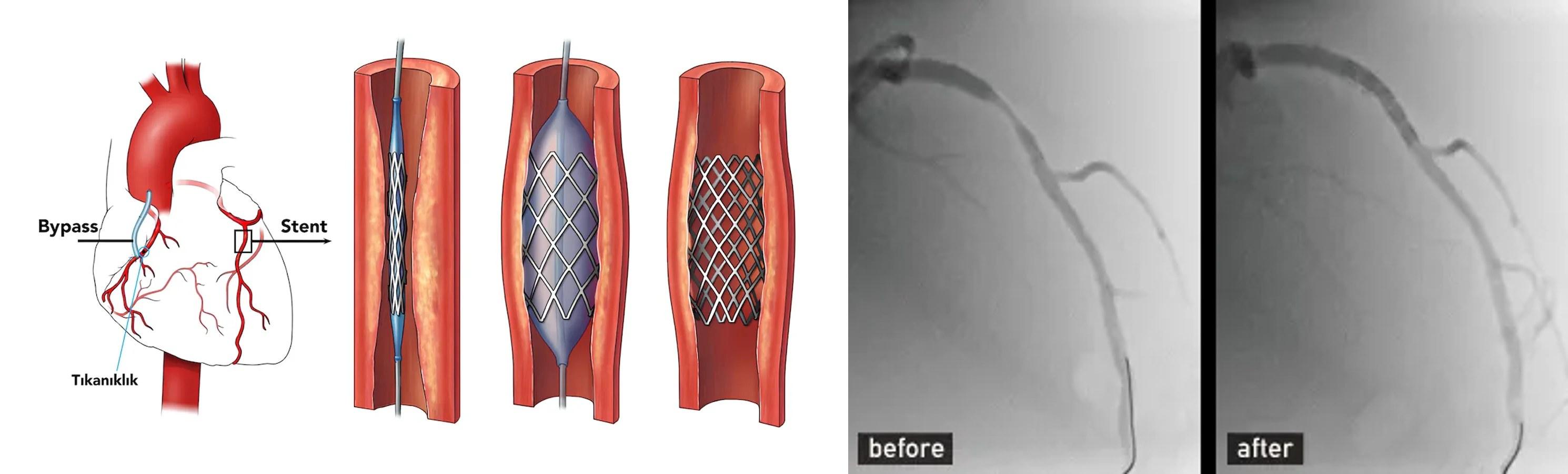
In most contemporary PCI procedures, a coronary stent is subsequently implanted to help maintain the vessel's opening.

PCI can be used in both acute coronary syndromes and selected patients with stable coronary artery disease. The procedure typically takes 30–60 minutes, and patients are generally discharged from the hospital the following day.

WHAT IS A CORONARY STENT?

Coronary Stent

A coronary stent is a small expandable metal mesh structure implanted inside a coronary artery to help maintain vessel patency after angioplasty.

Modern coronary stents are usually drug-eluting stents, which release medication designed to reduce the risk of excessive tissue growth and restenosis.

Stent treatment can:

  • Restore coronary blood flow
  • Relieve ischemia-related symptoms
  • Treat acute coronary artery blockage
  • Reduce the risk associated with an acutely blocked coronary artery

A coronary stent does not cure the underlying process of atherosclerosis. Long-term cardiovascular risk-factor management remains essential after PCI. The procedure typically takes 30–60 minutes, and patients are generally discharged from the hospital the following day.

Get in touch with us for an evaluation

Send your appointment request; we'll let you know about the evaluation process suited to your complaint and needs.

Explore Pacemakers & Devices