
What Is Atrial Fibrillation Ablation?
Atrial fibrillation (AF) is the most common sustained heart rhythm disorder. During AF, rapid and irregular electrical activity occurs in the heart's atria. As a result, the heart rhythm becomes irregular. AF ablation is a catheter-based treatment method applied to reduce the frequency and duration of atrial fibrillation episodes.
- Catheter-Based
- Method
- In the Electrophysiology Laboratory
- Setting
- Under Sedation or Anesthesia
- Anesthesia Approach
What Is the Basis of Treatment?
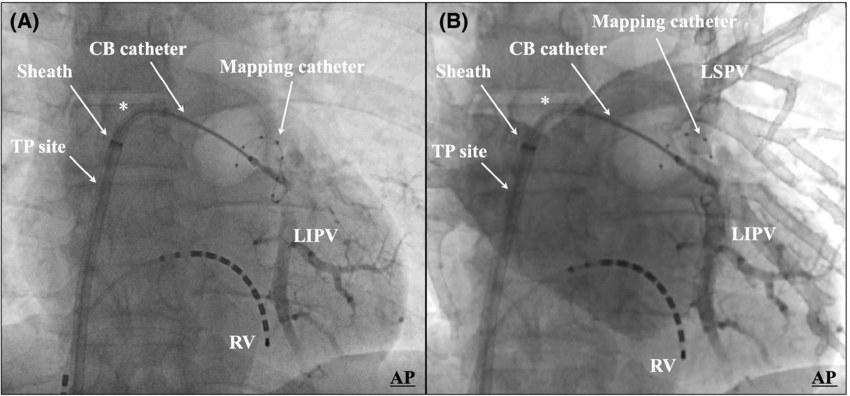
In most patients, the basis of treatment is pulmonary vein isolation. In this procedure, the abnormal electrical conduction between the pulmonary veins and the heart's left atrium is blocked. Different energy methods may be used during ablation:
Radiofrequency energy
Cryoballoon (freezing) technology
What Can AF Ablation Help With?
In suitable patients, AF ablation may help reduce symptoms and lower the risk of the rhythm disorder recurring.
Included
Not included
Evaluation and Approach
During the Atrial Fibrillation Ablation process, care is taken with the following points before and during the procedure.
Detailed Preliminary Evaluation
Before the procedure, the patient's rhythm recordings, imaging results, and overall heart health status are evaluated together.
Electrophysiological Mapping
During the procedure, the heart's electrical activity is mapped with specialized catheters to identify the areas causing the rhythm disorder.
Continuous Monitoring During the Procedure
Heart rhythm, oxygen level, and other vital signs are closely monitored throughout the procedure.
Individualized Follow-Up Plan
After the procedure, check-up examinations and, when necessary, additional tests are planned based on the patient's condition.
How Long Does the Procedure Take?
AF ablation generally takes 60–90 minutes, and patients are mostly discharged the following day.
Clinical Suitability Evaluation
The suitability of Atrial Fibrillation Ablation is determined not by a single criterion but by evaluating various clinical factors together, such as the following.
Type and Duration of the Rhythm Disorder
The distinction between paroxysmal (episodic) and persistent atrial fibrillation, along with the frequency and duration of episodes, is decisive in the evaluation process.
Accompanying Heart Conditions
Conditions such as structural heart disease, valve problems, or heart failure are taken into account in procedure planning.
Previous Test and Imaging Results
Results of tests such as ECG, Holter rhythm recording, and echocardiography form the basis of the evaluation.
General Health Status and Medication Use
The patient's medications, factors affecting bleeding risk, and general health status play a role in procedure planning.
The information here is for general informational purposes; the diagnosis and treatment plan are determined following an individualized evaluation.
Frequently asked questions about Interventional Electrophysiology
Atrial Fibrillation Ablation is an interventional electrophysiology procedure in which the areas causing irregular electrical signals in the heart are targeted via catheter. The aim is to help regulate the heart rhythm by neutralizing the electrical foci causing atrial fibrillation. The procedure is performed in the electrophysiology laboratory using the Catheter Ablation method.
It may be considered in atrial fibrillation patients whose symptoms persist despite medication or who cannot tolerate medication, in order to help with rhythm control. Whether the procedure is suitable is decided by evaluating the type of the patient's rhythm disorder and general health status together.
It may come up as an option in patients with persistent complaints such as palpitations, fatigue, or shortness of breath related to atrial fibrillation, where a rhythm control approach is deemed appropriate following cardiology evaluation. Whether the recommendation is suitable for the individual is determined after a detailed evaluation.
The procedure is carried out in the electrophysiology laboratory using catheters advanced from the groin region. First, the heart's electrical activity is mapped, and then ablation is applied to the areas causing the rhythm disorder. The procedure is generally performed under sedation or anesthesia.
In many cases, an Electrophysiological Study (EPS) is performed in the same session as the ablation procedure to map the heart's electrical activity. This evaluation helps to more clearly identify the areas causing the rhythm disorder.
After the procedure, the patient is kept under observation for a while and rhythm follow-up is performed. Check-up examinations and, when deemed necessary, additional tests after discharge are planned individually by the physician.
Get in touch with us for an evaluation
Send your appointment request; we'll let you know about the evaluation process suited to your complaint and needs.