
What Is Aortic Valve Stenosis?
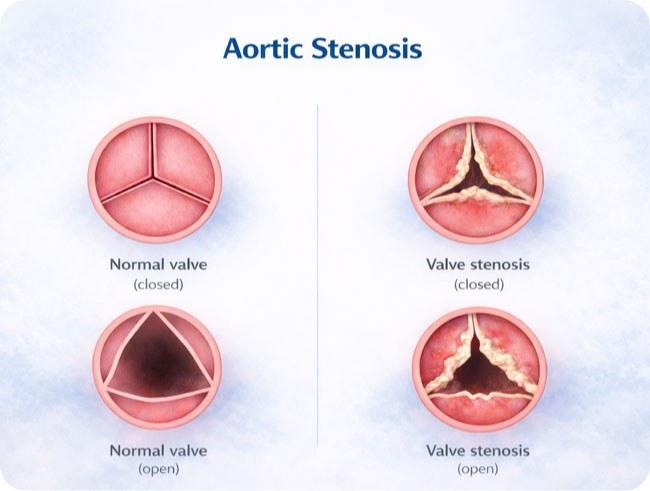
The aortic valve allows blood leaving the heart to pass into the aorta. Aortic valve stenosis occurs when the valve thickens and becomes calcified, so that it can no longer open fully, making it harder for blood to pass from the heart to the body.
Mild stenosis may not cause symptoms for a long time. As the stenosis progresses, shortness of breath, chest pain, easy fatigue, dizziness, and fainting — especially with exertion — may occur.
What Are the Risks?
Severe aortic valve stenosis makes the heart work harder and can, over time, lead to heart failure, rhythm disorders, fainting, and life-threatening complications.
How Is It Diagnosed?
Echocardiography (echo) is the most important diagnostic method. Echo is used to assess the degree of narrowing, the velocity of blood flow across the valve, the valve area, and the heart's pumping strength. Additional tests such as cardiac CT, ECG, and cardiac catheterization may be performed when needed.
How Is It Treated?
- Regular follow-up: for patients with mild to moderate stenosis who have no symptoms.
- Medication: does not eliminate the stenosis; used to treat accompanying blood pressure, heart failure, or rhythm problems.
- TAVI (transcatheter aortic valve implantation): placement of a new aortic valve via a catheter through an artery in the groin, without surgery.
- Surgical valve replacement: open-heart surgery to replace the diseased valve with an artificial one.
Valve replacement may be required in severe, and especially symptomatic, aortic valve stenosis. The choice between TAVI and surgical treatment is determined based on the patient's age, general health, and heart structure.