
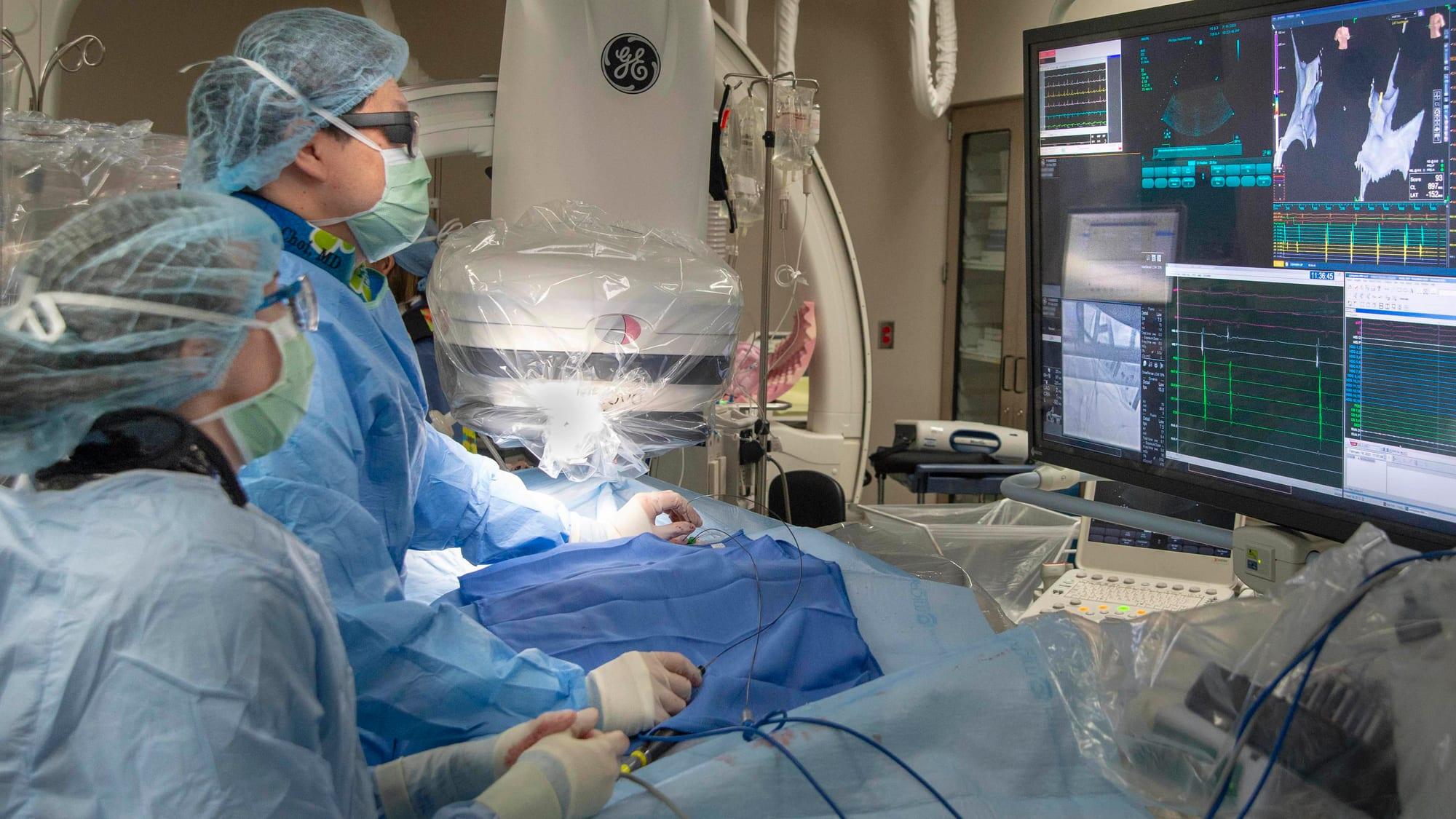
Before catheter ablation, patients are generally asked to adjust certain medications (especially blood thinners), fast for the period specified by the doctor, and have a companion with them on the day of the procedure. The preparation process is personalized by the electrophysiologist based on the medications used, any accompanying conditions, and the type of ablation planned. This page contains practical information patients should generally know before and after the procedure.
Preparation Process Before the Procedure
In patients scheduled for catheter ablation, certain tests are performed and some adjustments are requested before the procedure. The electrophysiologist creates a personalized preparation plan by evaluating the medications the patient is taking, especially anticoagulants (blood thinners), any accompanying conditions, and the type of ablation planned (for example, atrial fibrillation ablation).
During this process, imaging studies such as an electrocardiogram and echocardiography, blood tests, and a general health assessment may be requested. In some patients, additional imaging methods may also be used to confirm that there is no clot in the heart chambers.
- Fasting for the period specified by the doctor before the procedure
- Adjusting medications used, especially blood thinners, under the physician's guidance
- Sharing any history of medication or contrast dye allergy with the physician
- Having a companion on the day of the procedure
- Completing the requested blood tests and imaging studies in advance
What Happens on the Day of the Procedure?
Catheter ablation is a catheter-based procedure generally performed by accessing vessels in the groin area and advancing thin catheters to the heart. Local anesthesia and sedation are commonly used during the procedure; a different anesthesia approach may also be chosen depending on the patient's condition.
In the first stage of the procedure, the heart's electrical activity is mapped with an electrophysiological study (EPS), and the areas causing the arrhythmia are identified. Ablation is then applied to these areas. The duration of the procedure can vary depending on the type of arrhythmia, the anatomical features of the heart, and the extent of mapping required.
The First Hours and Days After the Procedure
After the procedure, patients are kept under observation for a period of time; the site where the catheter was inserted is checked for bleeding, swelling, or bruising. During this time, movement restriction may be recommended for the leg where the procedure was performed; its duration is determined based on the physician's assessment.
Although the length of hospital stay after ablation varies from person to person, it is generally limited to a same-day or short observation period. In the first days after discharge, mild tenderness or bruising at the access site or a temporary sensation of discomfort in the chest may be seen; these findings generally decrease over time.
- Keeping the access site clean and dry
- Avoiding heavy lifting and strenuous movements for the period specified by the doctor
- Not driving for the recommended period
- Regularly monitoring body temperature and the access site
Returning to Daily Life
Most patients can gradually return to their daily activities within a few days. However, the time to return to tasks requiring heavy physical effort or intense sports activities is determined based on the patient's general health condition and the physician's recommendation.
Monitoring the heart rhythm is important in the period after the procedure. If deemed necessary, the physician may request a Holter (rhythm recording) or a follow-up electrocardiogram at certain intervals. Regularly attending scheduled follow-up appointments is important for evaluating the recovery process and the effect of the ablation.
Points to Consider in Medication Use
After ablation, the use of antiarrhythmic medication or blood thinners may continue for a certain period in many patients. When and how these medications are stopped depends entirely on the physician's assessment; it is not recommended for the patient to stop the medication on their own.
If a new medication, supplement, or herbal product has been started, this must be shared with the physician, because some substances can alter the effect of blood thinners. It is important for patients taking blood thinners to inform their physicians about this before any future planned dental treatment or other surgical procedure.
- Not stopping medications or changing their dose without the physician's approval
- Informing the physician of any new medication, supplement, or herbal product use
- If taking a blood thinner, informing the physician before any other medical procedures
When Should You See a Doctor?
The recovery process after the procedure generally proceeds without problems; however, medical evaluation should be sought without delay if certain findings appear. These findings include bleeding at the access site that cannot be controlled, rapidly increasing swelling, or increasing pain.
It is also recommended to contact the physician or, if necessary, go to the nearest healthcare facility for situations such as a feeling of pressure in the chest, shortness of breath, sudden episodes of palpitations, high fever, or a feeling of fainting.
- Bleeding at the access site that does not stop, or rapidly increasing swelling
- Fever above 38°C
- A feeling of pressure in the chest or shortness of breath
- Sudden swelling, color change, or a feeling of coldness in the leg
- A feeling of fainting or recurring episodes of palpitations
Frequently asked questions
You are generally asked to fast starting from midnight before the procedure; however, the exact duration regarding solid and liquid food intake can vary depending on the patient's procedure time and the instructions given by the physician.
Most patients can return to their daily activities within a few days. The time to return to tasks requiring heavy physical effort or intense sports activities is determined based on the person's general health condition and the physician's assessment.
Yes, the use of antiarrhythmic medication or blood thinners is continued for a certain period in many patients. Stopping the medication or changing its dose should only be done under the physician's supervision and recommendation.
Mild bruising and tenderness at the access site are commonly seen findings and generally resolve on their own over time. However, a doctor should be consulted if rapidly increasing swelling or bleeding that does not stop is noticed.
During the preparation stage, an electrocardiogram, echocardiography, and blood tests are generally requested. In some patients, additional imaging methods may also be used to assess that there is no clot in the heart chambers.