
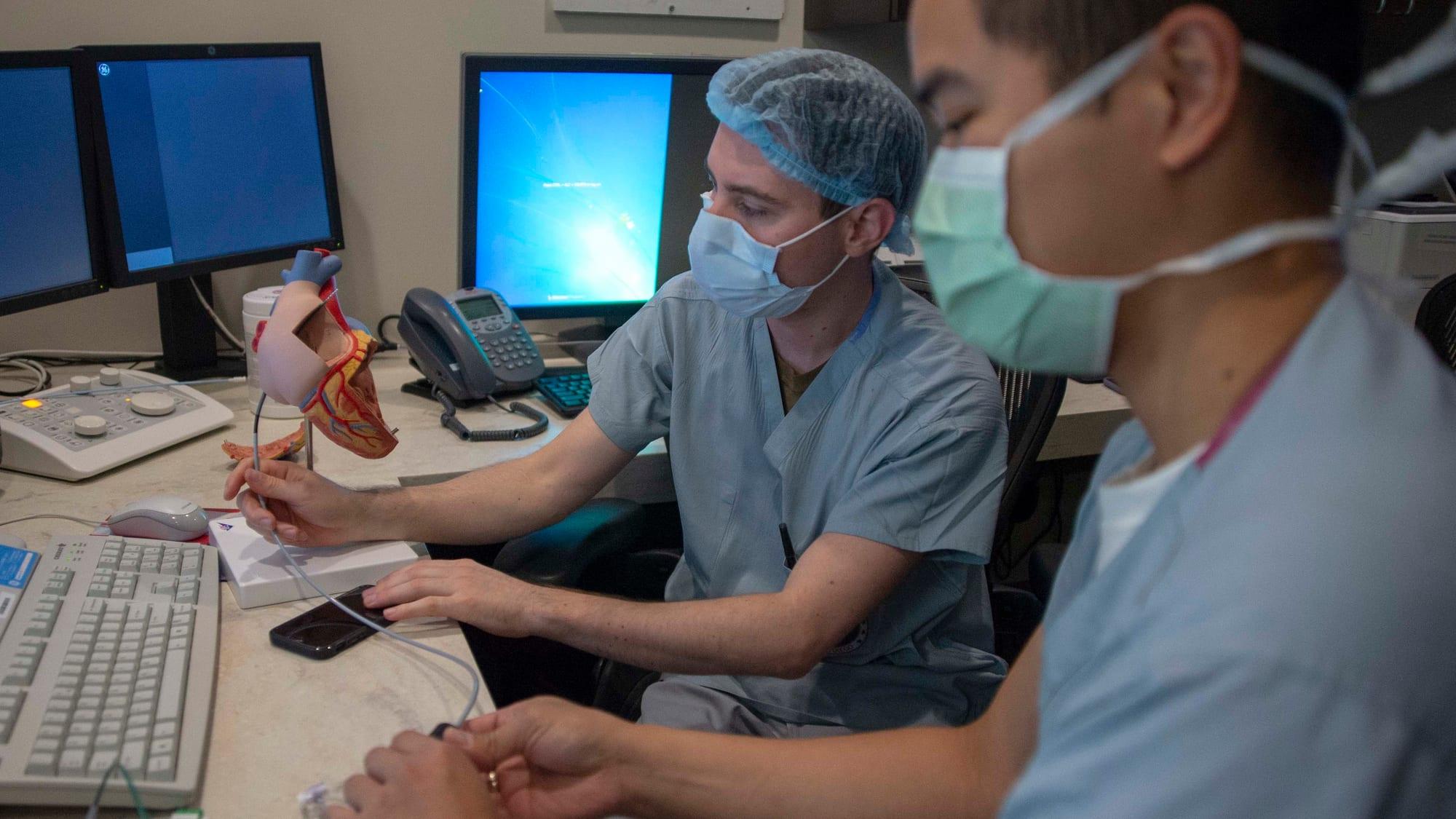
Carotid artery disease is the narrowing of the arteries that carry blood to the brain, most often due to atherosclerosis; plaque inside the artery can reduce blood flow, or a clot breaking off the plaque can travel to the brain and increase the risk of stroke or transient ischemic attack (TIA). Carotid artery stenting is a minimally invasive, catheter-based procedure performed in selected patients with severe carotid narrowing to reduce the risk of stroke. This article covers the symptoms of carotid artery disease, diagnostic methods, and the stenting process.
What Is Carotid Artery Disease?
The carotid arteries are the main blood vessels on either side of the neck that carry blood to the brain. Over time, plaque buildup on the artery wall can cause these arteries to narrow; this can reduce blood flow and also increase the risk that a clot breaking off the plaque will travel to the brain and cause a stroke.
Carotid artery disease can progress silently for a long time without causing any symptoms, and is often noticed during a routine examination or imaging study.
What Are the Symptoms?
Although carotid narrowing can be silent, the following symptoms may appear during a transient ischemic attack (TIA) or stroke. These symptoms require urgent medical evaluation, and the nearest emergency department should be contacted without delay.
- Sudden weakness or numbness on one side of the body
- Sudden difficulty speaking or understanding speech
- Sudden vision loss in one eye
- Sudden dizziness or loss of balance
How Is It Diagnosed?
Carotid Doppler ultrasound is generally the first-line method for evaluating carotid artery narrowing. When needed, advanced imaging methods such as CT angiography (CTA) or MR angiography (MRA) can be used to examine the degree of narrowing and the characteristics of the plaque in more detail.
What Is Carotid Artery Stenting, and How Is It Performed?
In carotid artery stenting, a thin catheter is advanced through the blood vessel to reach the narrowed segment of the carotid artery, and a stent is placed to keep the artery open. The procedure is usually performed under local anesthesia and takes 45-90 minutes; in suitable patients, specialized access techniques such as TCAR (Transcarotid Artery Revascularization) may also be considered.
After the procedure, the patient is monitored for neurological status; the hospital stay is generally 1-2 days.
Stenting or Endarterectomy?
There are two main approaches to treating severe carotid narrowing: catheter-based carotid artery stenting, and carotid endarterectomy, in which the plaque is directly removed through an open surgical incision in the neck. Which method is appropriate is determined by evaluating the degree of narrowing, the characteristics of the plaque, whether the patient has recently had a TIA or stroke, age, general health status, and anatomical structure together.
Control of Risk Factors
Carotid artery disease is one of the preventable causes of stroke. Keeping risk factors such as high blood pressure, elevated cholesterol, smoking, and diabetes under control through regular monitoring and treatment plays an important role in slowing the progression of narrowing and reducing the future risk of stroke.
When Should You See a Doctor?
If symptoms such as sudden weakness, difficulty speaking, vision loss, or loss of balance are noticed, the nearest emergency department should be contacted without delay; every minute matters when stroke is suspected. In the period after the procedure, increasing swelling or bleeding at the access site, or newly developed neurological symptoms, should be reported to the physician.
Frequently asked questions
Carotid artery stenting is a minimally invasive procedure that involves placing a stent in the narrowed segment via catheter, performed in patients with severe carotid narrowing to reduce the risk of stroke.
Carotid artery narrowing may not cause symptoms for a long time. During a TIA or stroke, symptoms such as sudden weakness/numbness on one side of the body, difficulty speaking, sudden vision loss in one eye, or sudden loss of balance may occur; these symptoms require urgent evaluation.
Stenting is performed via catheter; endarterectomy involves removing the plaque through an open surgical incision in the neck. The choice is determined based on the patient's anatomy and risk profile.
Carotid Doppler ultrasound is generally the first-line method; when needed, CT angiography or MR angiography is used to evaluate the degree of narrowing and plaque characteristics.
After the procedure, the patient is monitored for neurological status; the hospital stay is generally 1-2 days.
Keeping risk factors such as high blood pressure, elevated cholesterol, smoking, and diabetes under control through regular monitoring and treatment plays an important role in reducing stroke risk.